
Can you spot the mistake before it costs you?
Eight situations every owner-builder meets. Pick what you'd do, and you'll see the answer and the reason straight away. It takes about three minutes.
What are you building?
You get three quotes to paint the house: $37,000, $65,000 and $93,000. What do you do?
Quotes that far apart are almost never pricing the same work. One leaves out the prep or a coat, another includes doors and ceilings. Write the scope yourself so every painter prices the same job, then compare them line by line.
These three numbers are real. An owner-builder shared them in an online group.
Covered in week 2 · Takeoffs and quotes
Next question ↓On site, your plumber says the hot water unit should move, and it'll be “a bit extra”. You say go ahead. What's the problem?
Agree every change in writing before the work starts: what's changing, what it costs and whether it adds time. A text or an email is better than nothing. Unpriced “bits extra” are where final bills blow out and arguments start.
Covered in week 6 · Variations, defects and disputes
Next question ↓Your framer wants half the price up front before they start. What's the sensible answer?
Pay for work done, not work promised. A small deposit, then stage payments for work that's finished and checked, protects you if a trade walks off the job. Put the payment stages in the contract before they start.
Covered in week 3 · Contracts administration
Next question ↓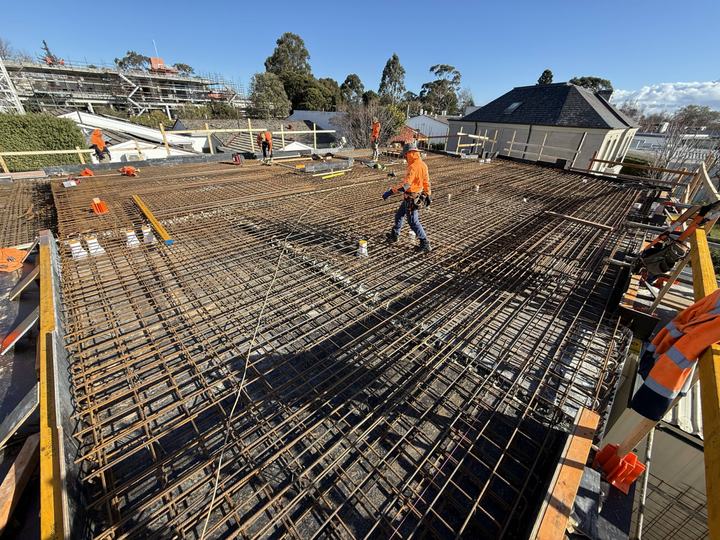
The slab steel is laid and the concrete truck is booked for 7 am tomorrow. What has to happen before the pour?
Before a reinforced slab is poured, the steel must be inspected. It's one of the mandatory stages: you notify your building surveyor, and nothing is poured until it's passed. Book it early. Pour before it's done and you may have to prove the slab is right, which can mean testing it or opening it up.
Covered in week 4 · Site works and slab
Next question ↓It's slab week. When should the windows be ordered?
Windows are made to order and can take weeks to arrive. The house can't reach lock-up without them, and every trade after that waits. Order early from the plans, and have the supplier check-measure the frame before they make them.
Covered in week 3 · Project management
Next question ↓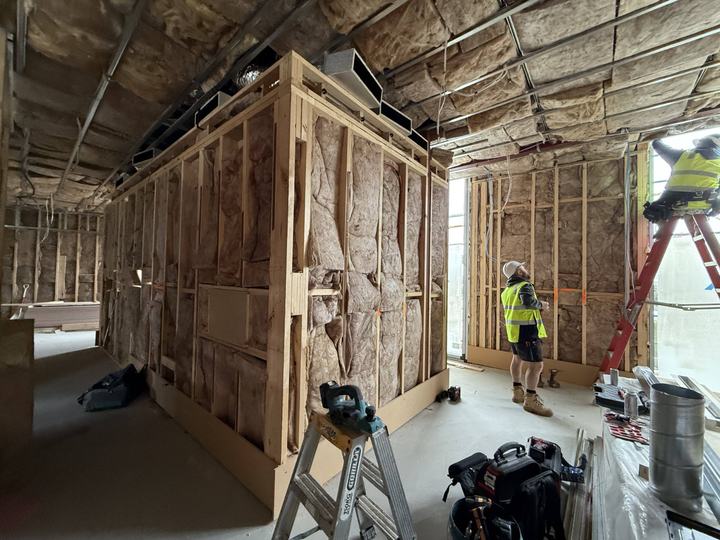
The plasterer starts Monday. The electrician hasn't finished and the insulation isn't in. What do you do?
Once the walls are lined, anything missed means cutting the plaster open and patching it. Electrical, plumbing, heating and data rough-ins, and the insulation, all go in and get checked before the plasterer starts.
Covered in week 5 · Services and fit-out
Next question ↓The tiler has finished, but two tiles are cracked and the grout is patchy. They want their final payment today.
Once a trade is paid in full, you've lost your leverage. Put defects in writing with photos and agree a date to fix them. Better still, agree when you sign the contract that the last payment waits until defects are fixed.
Covered in week 6 · Variations, defects and disputes
Next question ↓You've priced every trade, and the total matches your loan exactly. What's the risk?
Every build meets surprises: rock in the footings, a price rise, a change you decide to make. A contingency of 10–15% of the build cost is a common starting point. Extra money mid-build is hard to find, because banks lend in set stages.
Covered in week 1 · Budget and cash flow
See your score ↓You'd catch some of these.
The ones you missed are the kind that cost real money. The course covers every one, in the order they come up on site.
Learn what to check at every stage.
Six weekly evening classes live on Zoom, in a Tuesday or Thursday group, or the same course online at your own pace. Taught by a project manager with over 10 years running Melbourne builds. Live from A$1,999, online from A$999, and every level comes with the build pack. Talk to your instructor first; there's nothing to pay until you're ready.